
Ground Work Done Right the First Time
Excavation in Burlington for foundation trenching, site grading, and utility line preparation
Towsley Handyman Services performs residential and commercial excavation in Burlington, handling everything from foundation digging and footing excavation to drainage trenching and driveway preparation. Homeowners and contractors need excavation done to grade before anything else can be built, and errors at this stage create compounding problems for every phase that follows. Towsley approaches each site with attention to the actual conditions underfoot, not a one-size approach that ignores what the land is doing.
The scope of excavation work includes site preparation for construction and landscaping, land clearing and rough grading, soil removal and relocation, backfilling and compaction, and trenching for utility and drainage systems. When a project calls for patio or retaining wall excavation, the depth and slope of the cut must account for how water will move once the hardscape is in place. Proper compaction after backfilling is what prevents settlement that shows up months later as cracked slabs or shifted footings.
Arrange a site visit to review the specific excavation needs for your property before work begins.
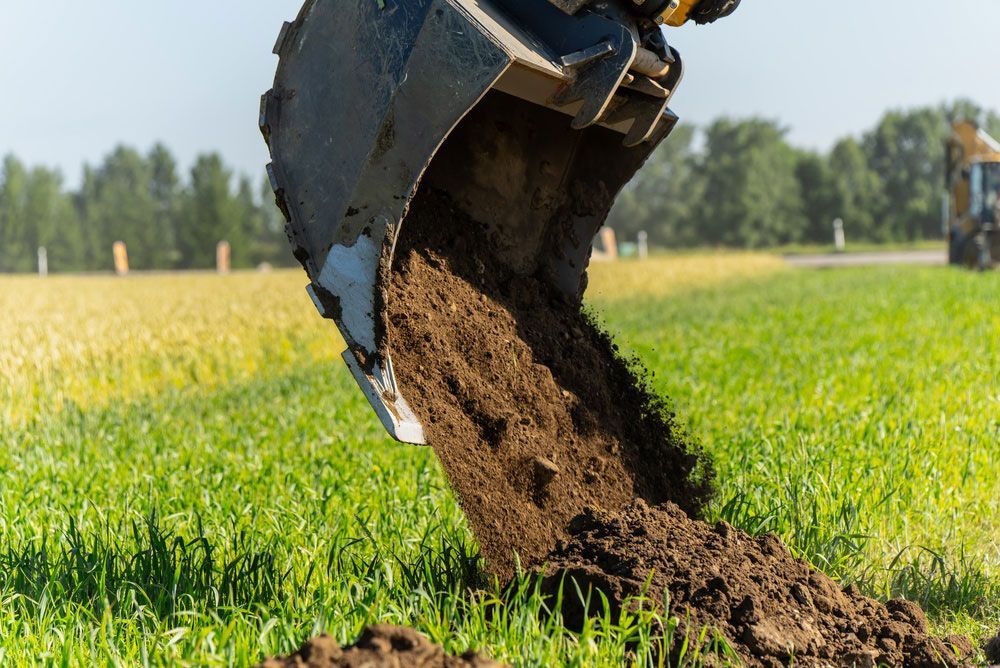
How Excavation Sets Up Every Stage That Follows
Excavation is not simply moving dirt. Each cut is made to a specific depth and slope that supports whatever is being built above it, whether that is a foundation, a driveway base, a drainage trench, or a retaining wall footing. Towsley Handyman Services works through site preparation in a deliberate sequence: clearing and grading come first, followed by the primary excavation cuts, then soil removal and relocation, with backfilling and compaction completed only after underground work has been inspected or finalized.
Once excavation is complete, the results are visible in the surface grade, the defined trench lines, and the compacted base material ready to receive concrete, stone, or pipe. A properly graded site directs surface water away from structures rather than toward them, which is something you can confirm with a garden hose before any concrete is poured. The difference between a site that was graded correctly and one that was not often does not become apparent until the first significant rain runs across the finished surface.
Access and site conditions affect how excavation equipment moves and where spoil can be staged. Tight residential lots, utility corridors, and existing landscaping all factor into how the work is sequenced. The scope of what is included covers yard leveling, rough grading, driveway and access road preparation, and drainage and water management excavation, with debris and removed soil handled as part of the project.
What Property Owners Ask About Excavation Work
The questions below address how excavation is actually performed and what property owners should understand before work begins in Burlington.
What is the difference between rough grading and finish grading, and which does excavation cover?
Rough grading establishes the overall slope and elevation of a site, removing high spots and filling low ones to create the base condition. Finish grading is a finer pass done closer to the end of a project, and excavation work typically delivers rough grade unless otherwise scoped.
How is soil compaction verified after backfilling?
Compaction is assessed by the density of the material after it has been mechanically tamped in lifts, meaning layers are compacted individually rather than all at once. Filling a trench in a single pour and compacting only the top is a common shortcut that leads to settlement later.
What happens when buried utilities are encountered during trenching?
Before trenching begins, utility locates should be called so underground lines are marked. When lines are identified on site, the trench route is adjusted or hand-digging is used near the marked zone to avoid contact with live utilities.
Why does excavation depth matter for foundation footings?
Footings must be dug to a depth that places them below the frost line for the region, which in Vermont varies but is substantial. A footing poured too shallow will heave and shift as the ground moves, causing structural damage to whatever sits above it.
What determines whether excavated soil can be reused for backfill?
The suitability of native soil for backfill depends on its composition. Clay-heavy soil retains water and does not compact predictably, making it a poor backfill material in many situations. Granular fill, such as crushed stone or clean gravel, is often brought in to ensure stable, well-draining backfill around foundations and utility lines.
Towsley Handyman Services is ready to review your excavation project and outline what site preparation will require based on your specific lot and construction plans. Contact Towsley to schedule an on-site evaluation and discuss the full scope of the work.