
Structures Removed Cleanly Before New Work Starts
Demolition in Burlington for partial teardowns, outbuilding removal, and renovation site prep
A rotting deck attached to the house, a shed that has outlived its usefulness, or a kitchen that needs to be stripped before remodeling can begin—these situations all require demolition that is controlled, sequenced properly, and leaves the site ready for what comes next. Towsley Handyman Services handles residential and commercial demolition in Burlington, covering everything from selective interior teardowns to full structure removal and site clearing. The kind of work that needs doing before a contractor can frame, pour, or build depends entirely on what is being removed, and Towsley scopes each job based on those specifics.
The range of demolition services includes interior and exterior work, full and partial structure removal, shed and garage teardowns, deck and patio removal, concrete and pavement demolition, and kitchen or bathroom strip-outs for remodel projects. Selective demolition—removing only specific walls, surfaces, or systems while leaving the rest intact—requires more planning than a full teardown because the work must stop at precise points without damaging adjacent structure. Debris removal and site cleanup are included, so the lot or room is cleared and ready when demolition is finished.
Request an on-site assessment to determine the scope and sequence for your demolition project..
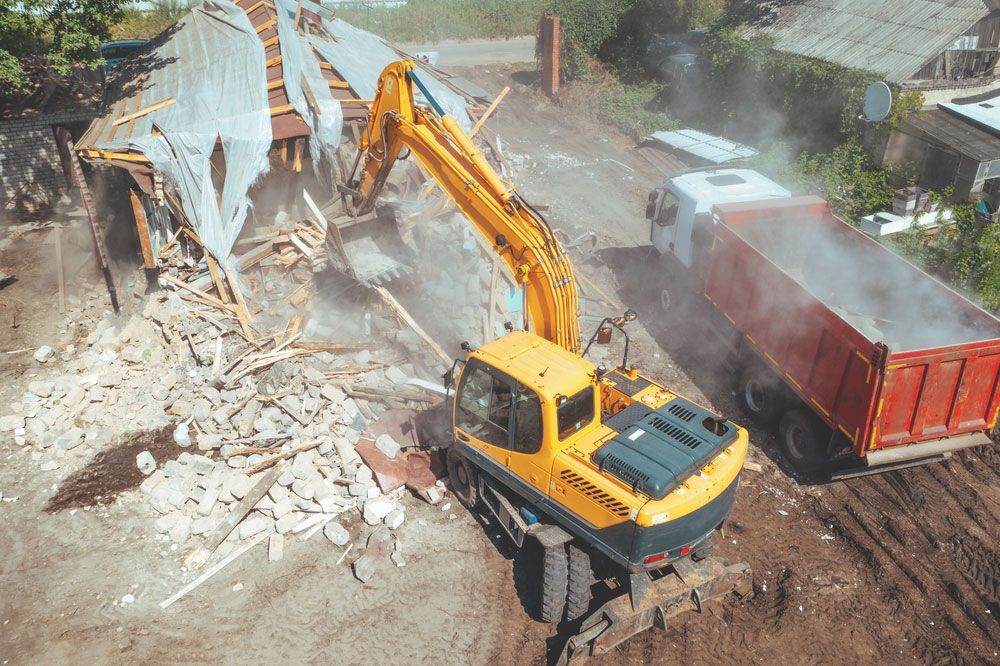
What Proper Demolition Actually Requires
The sequence of demolition matters as much as the work itself. On a partial structure removal, the order in which materials come down determines whether the remaining structure stays plumb and intact. Interior demolition for a remodel typically begins with removing finishes—tile, drywall, cabinetry—before any structural elements are touched, and utility disconnections happen before walls are opened to avoid cutting into live electrical, plumbing, or gas lines. Towsley Handyman Services follows this sequencing on every project, treating selective demolition with the same deliberateness as full teardowns.
Once demolition is complete, you will see cleared framing bays, open subfloor, or bare earth depending on what was removed. A properly demolished site has no debris left in wall cavities, no broken material left under a slab, and no fasteners or framing remnants standing where new work needs to be placed. The cleanup phase is not an afterthought—leaving a site ready for the next trade or for backfill is part of what makes demolition useful rather than just destructive.
Outbuilding demolition, including sheds and detached garages, involves disconnecting any utilities that run to the structure before work begins, then removing roofing and wall materials before the foundation or slab is addressed. Concrete slab removal is a separate step from structure removal and should be planned as part of the overall scope if the ground needs to be clear for new construction or landscaping..
Common Questions About Demolition Work
These questions address how demolition is planned and executed, with specific detail on the types of projects handled in Burlington.
What is selective demolition and how does it differ from a full teardown?
Selective demolition removes specific components—a wall, a ceiling, a bathroom, a section of concrete—while leaving surrounding materials undamaged. The work requires identifying exactly where cuts and stops need to be made before anything is removed, which is more precise and often slower than clearing a full structure.
How is an attached deck removed without damaging the house structure it is connected to?
Deck ledger boards are fastened directly to the rim joist or foundation of the house, so removal has to address the fasteners and flashing carefully. Once the ledger is detached, any penetrations in the house sheathing are sealed before the project is considered complete.
What has to happen before interior demolition begins in a kitchen or bathroom?
Utility disconnection comes first—water supply lines are shut off and capped, electrical circuits to the area are de-energized, and gas lines are confirmed off before any walls or fixtures are touched. Skipping this step is the source of most damage incidents during remodel demolition.
How is concrete pavement or a slab removed?
Concrete is typically broken with a jackhammer or saw-cut into manageable sections, then removed with equipment capable of lifting and loading the broken pieces. The depth and reinforcement of the slab affect how much work breaking it requires, which is why older slabs with heavy rebar take longer to process than thin unreinforced pads.
What does debris removal include and how is the material handled?
Debris removal covers the material generated by the demolition itself—framing lumber, roofing, concrete rubble, drywall, and fixtures. The cleared material is loaded and hauled from the site as part of the project, leaving the area ready for the next phase of construction or landscaping.
Towsley Handyman Services can walk through your structure or renovation space and outline exactly what needs to come down and in what order. Set up a project review with Towsley to get an accurate picture of what your demolition will involve.